Best Cross Stitch Supplies I Actually Reach For (After Years of Trying Everything)
This post contains affiliate links, including Amazon links — I earn a small commission at no extra cost to you. These are tools I use and love.
The best cross stitch supplies aren’t the priciest ones — they’re the handful of well-made tools you reach for on every project. After years of stitching (and buying far more than I’ll admit), these are the cross stitch supplies I actually use and love: sharp embroidery scissors, a hoop that holds tension, the right tapestry needles, floss that glides, and the small extras that make an evening of stitching effortless.
There’s something quietly radical about making things by hand. In a world that moves fast and asks for everything now, sitting down with a hoop and a length of floss is a small rebellion — a way of saying, I have time for me. Whether you’re gathering supplies for your first cross stitch kit or refining a well-loved basket, here’s what earns its place, and why.
Start with good scissors
Good embroidery scissors are the one cross stitch supply I’ll tell you not to economize on. A sharp, well-made pair — the classic gold stork shape is a joy to hold — makes every cut clean and every snipped thread satisfying, right at the fabric. Look for fine, pointed tips that can slip under a single strand of floss; cheap scissors fray your thread and your patience both.
The little gold stork scissors I reach for on every project. Sharp enough to snip a single thread right at the fabric, and pretty enough to leave out on the table between sittings.

A hoop that feels good in the hand
A hoop that holds your fabric drum-tight is the difference between even, relaxed stitches and puckered, fussy ones. A smooth wooden hoop with a sturdy brass tightening screw does the job, and a 6- or 7-inch size is the sweet spot for most projects — large enough to work comfortably, small enough to hold for an hour. When I want to upgrade, I reach for Nurge’s plastic hoops: the lightweight square frames use a notch-and-groove edge and a center screw to grip your fabric and hold tension far better than wood, so nothing slips mid-project. They come in a handy set of three, so there’s always the right size on hand — which is exactly why the plastic Nurge is my pick for the best embroidery hoop for cross stitch.
A tidy little set that earns its place in any stitching basket. These lightweight Nurge plastic hoops use a notch-and-groove edge and a center screw to hold your fabric drum-tight, with no slipping or re-tightening halfway through a motif, and the square frames sit comfortably in your hands over a long evening of stitching. Because they come three to a set, you always have the right size ready for a quick ornament, a sampler, or a larger piece without breaking your rhythm. For cross stitch, needlepoint, and punch needle, it's the easy, affordable upgrade from a hoop that keeps going loose on you.

The needles I keep on hand
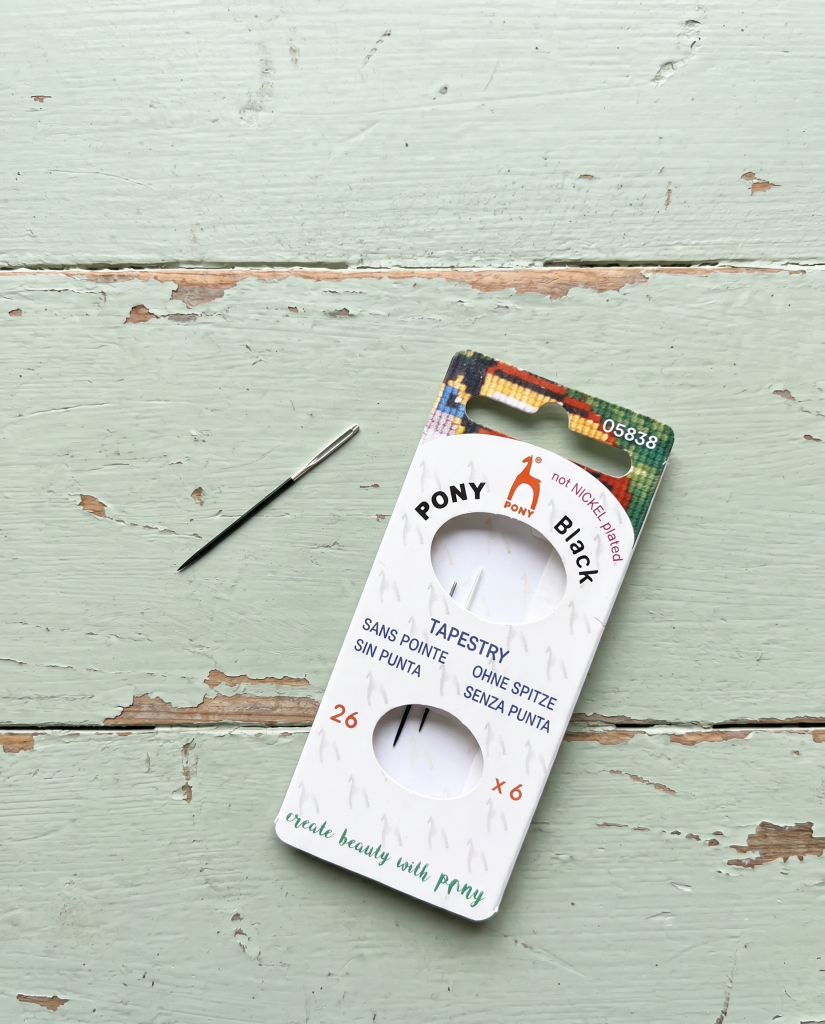
The right needle disappears into the work, and the two tapestry needles I keep on hand are both Pony. Pony white needles have a bright, smooth finish and a long eye that’s easy to thread — perfect for everyday cross stitch on lighter fabrics, where they slip through the weave without snagging. Pony black needles are gold-eye tapestry needles with a darker finish that’s gentle on your eyes against pale linen and glides through Aida just as cleanly. Between the two, I reach for Pony white on most projects and Pony black when I’m stitching on light fabric for hours and want less glare; a blunt-tip size 26 or 28 covers nearly everything I do. Other needles I’ve loved and used are the DMC brand and John James. Investing in good needles makes a real difference in both the time and the pleasure of stitching.
Floss you’ll actually enjoy
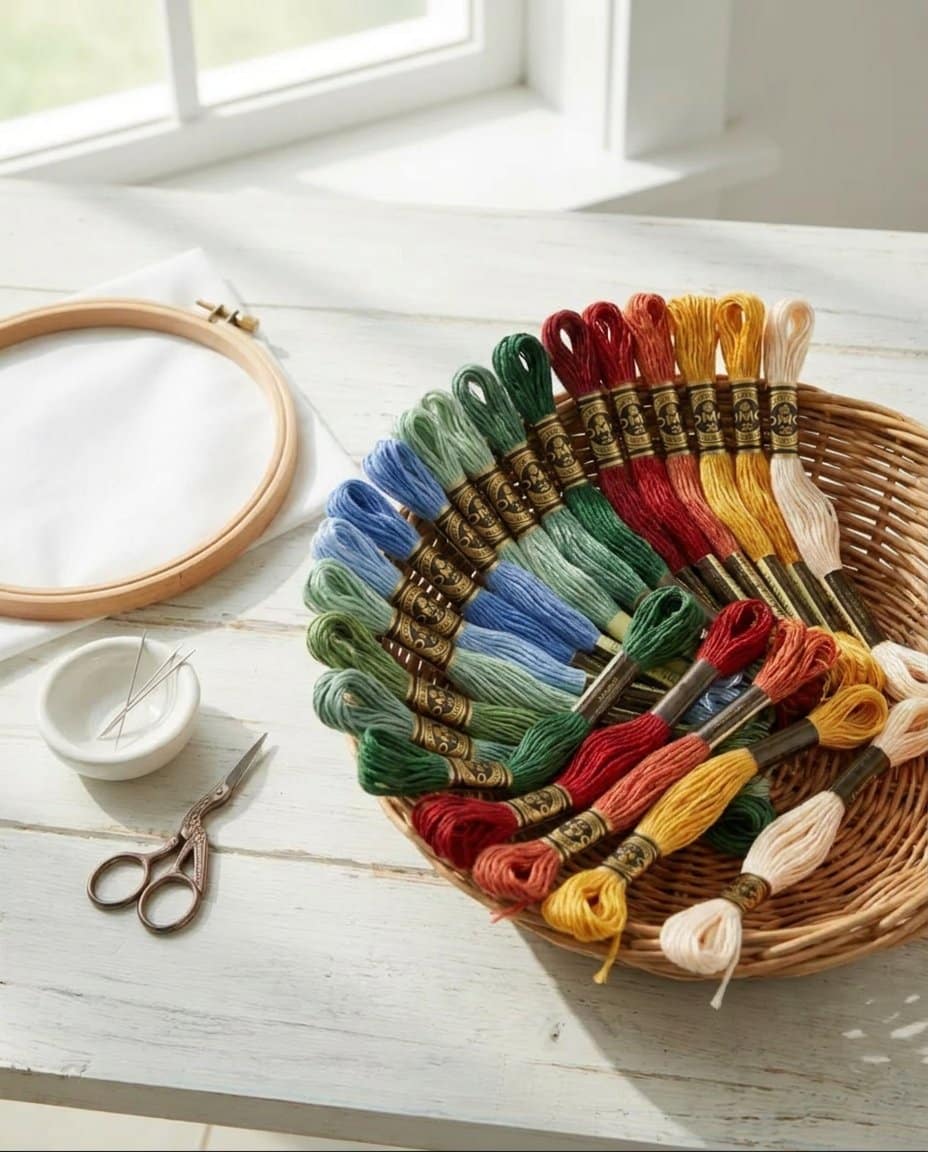
Good cotton floss glides; bargain floss knots and dulls. A starter set in a wide range of colors lets you wander without committing to single skeins — and there’s real pleasure in opening a box of organized color. For something special, I keep a few skeins of overdyed floss on hand: hand-dyed cotton that shifts gradually through several shades along a single strand. Those subtle color changes do the shading for you, so a plain pattern picks up depth and movement without ever swapping threads. I reach for overdyed floss on samplers, skies, and flowers — anywhere I want a soft, painterly look that solid DMC can’t quite give.
Good cotton floss is the difference between thread that glides and thread that knots, and DMC is the standard for a reason. This starter set gives you a wide range of colors in DMC's signature six-strand cotton: smooth, colorfast, and a pleasure to stitch with, so you can wander through a pattern without stopping to order single skeins. The strands separate cleanly for one, two, or three-thread work, and the color stays true wash after wash. If you're building a floss collection you'll actually enjoy reaching into, this is where I'd start.
The small things that make it effortless
It’s the little tools that quietly make stitching effortless. A magnetic needle minder keeps your needle exactly where you left it instead of lost in the sofa cushions, a thread conditioner tames fraying and tangles, and a folding pair of travel scissors means you can stitch wherever the mood strikes. None of it is essential — but each one removes a little friction, and together they turn a good stitching session into a great one.
A needle threader for tired evening eyes. A magnetic needle minder so nothing wanders off the arm of the chair. A little zip pouch so a project travels with you. None of these are essential — all of them make stitching feel gracious.
A pretty enamel magnet that holds your needle right where you left it. Set it on your fabric between stitches, and you will never dig through the sofa cushions for a lost needle again.

Choose a first project you’ll finish
There’s real momentum in finishing. A small, achievable first project — a seasonal motif, a simple sampler, a bookmark — builds the habit far better than an ambitious piece that stalls in a drawer.
A finished piece on the wall is worth a dozen half-started ambitions, and seasonal cross stitch always motivates me to decorate. The Halloween kit below is exactly the kind of beginner-friendly, stamped project that carries you from someday to finished in a weekend or two.
You don’t need a single thing to begin except the willingness to sit down and start. The good scissors can come later — the first stitch can come tonight.
A charmingly spooky stamped cross-stitch kit for adults and confident beginners. Two skeletons share a bench beneath a black moon while crows wheel over a haunted bookshop. The design is pre-printed on 11-count fabric, so there is no chart to count; you simply match the color symbols and stitch. Everything is included: the printed 14 by 14 inch fabric, sorted cotton threads, two needles, and English instructions. A cozy autumn project that finishes as charming seasonal wall art.

Cross Stitch Supplies: Frequently Asked Questions
What supplies do you need to start cross stitch?
To start cross stitch you need just five things: Aida or evenweave fabric, embroidery floss, a blunt tapestry needle (size 24 to 28), an embroidery hoop, and a small pair of sharp scissors. A stamped or pre-printed beginner kit bundles most of these together, which makes it the easiest way to begin.
What size needle is best for cross stitch?
A blunt tapestry needle in size 24 to 28 is best for cross stitch. Size 24 suits lower counts like 11-count Aida, while size 26 or 28 works well on 14-count and finer fabrics. The rounded, blunt tip slips between the fabric threads instead of splitting them.
What is the difference between 11-count and 14-count Aida?
Count is the number of stitches per inch. 11-count Aida has larger holes and bigger stitches, so it is easier on the eyes and ideal for beginners. 14-count is finer, so the same design comes out smaller and more detailed. Lower counts are more forgiving while you learn.
What is overdyed floss, and when should I use it?
Overdyed floss is hand-dyed cotton that shifts through several shades along a single strand. It creates soft, natural shading without changing threads, so it is lovely for samplers, skies, flowers, and anywhere you want gentle color movement.
Do you need an embroidery hoop for cross stitch?
You do not strictly need a hoop, but one keeps your fabric drum-tight for even, relaxed stitches and less puckering. A 6- or 7-inch hoop is the most versatile size, and adjustable plastic hoops hold tension better than wood on longer projects.