How to Make Any Home Feel Collected, Curated, and Intentional (Without Spending a Fortune)
This post contains affiliate links. As an Amazon Associate I earn from qualifying purchases. I only ever share pieces I genuinely love and would use in my own home — thank you for supporting the good life.
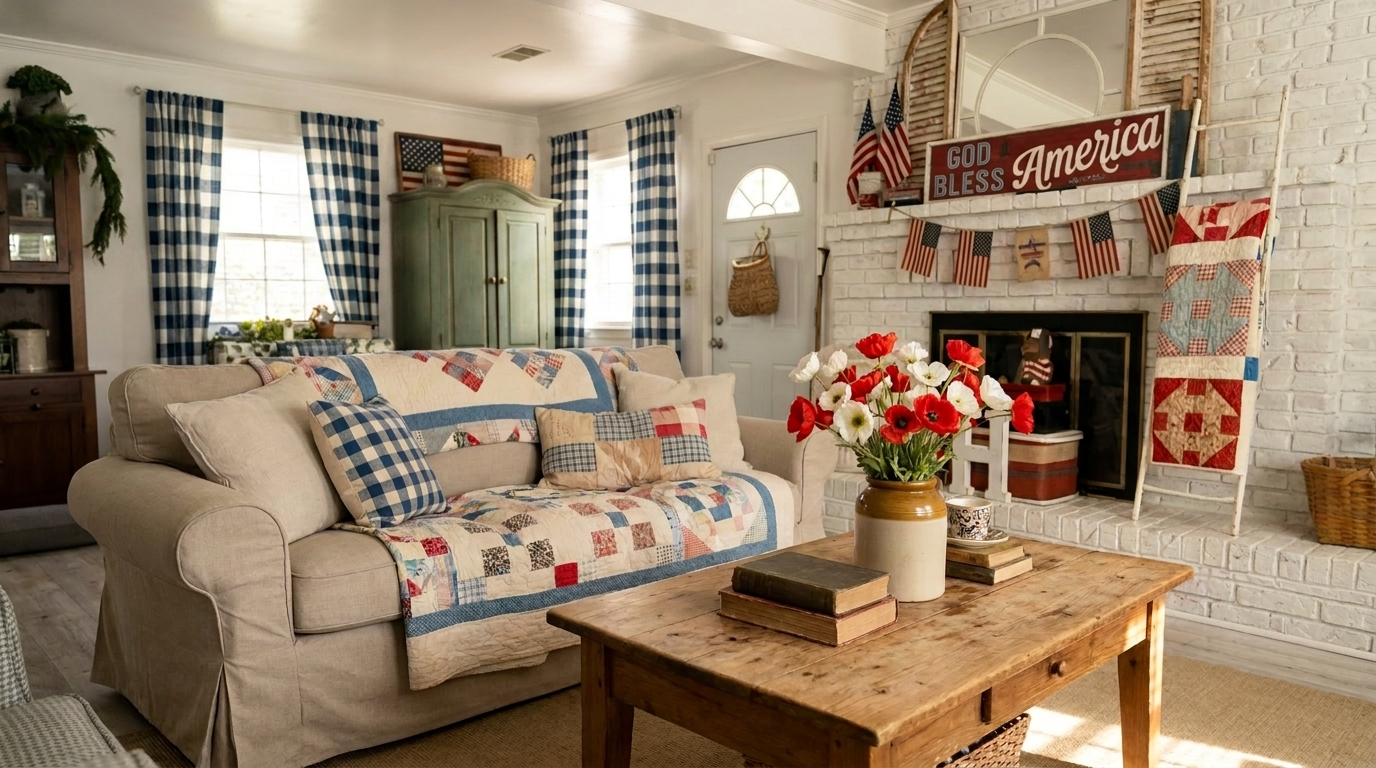
There’s a particular kind of home I’ve always been drawn to. You walk in and it feels gathered — like every piece arrived in its own time, carried a small story, and found its place naturally. Nothing matches in that showroom way, and yet the whole home exhales. It feels lived in, loved, and entirely like the person who made it.
For years I thought that look belonged to people with decorators and deep budgets. It doesn’t. A collected home isn’t about spending more — it’s about choosing better, slowing down, and learning to see what you already have with fresh eyes.
After the last few years of making things with my hands and a recent season of starting over in a quieter house, I’ve learned that the most beautiful homes are almost never the most expensive ones. They’re the most intentional. So let’s talk about how to get that warm, collected, layered feeling in your own home — gently, affordably, and in a way that actually feels like you.
What does a “collected” home actually mean?
A collected home is one that looks as though it came together slowly, over time, through a mix of pieces with different ages, textures, and stories. It feels layered and personal rather than purchased all at once. The hallmark of a collected home isn’t quantity — it’s clarity. Even a layered home feels calm because every piece earns its place.
Think of the difference this way: a decorated home can feel like a snapshot of one shopping trip. A collected home feels like a cozy life. That’s the feeling we’re after — and the good news is that you can begin building it today, with what’s already in your house.
A decorated room can feel like a snapshot of one shopping trip. A collected room feels like a life.
-tracy
Start with what you already own (before you buy a single thing)
This is the step almost everyone skips, including me in my younger years, and it’s the one that saves the most money. Before you add anything, subtract and rearrange.
Walk your home with a laundry basket and gather the pieces you love but have stopped noticing — the little brass dish in a drawer, the books stacked in a closet, the bowl your grandmother gave you. Pull lamps and side tables from other rooms. Try a chair in a new corner. You will be amazed how a room transforms before you’ve spent a dollar.
A few things to look for as you edit:
- Pieces with a story or a little age. These are the soul of a collected room.
- Things that have quietly gone invisible. Move them somewhere they’ll be seen again.
- Anything purely trend-driven that you no longer love. Let it go, or tuck it away.

Build on a calm, neutral base
Almost every collected, livable home I admire begins the same way: a neutral foundation. Creams, warm whites, soft taupes, oatmeal, and gentle “greiges” give the eye somewhere to rest, so that your layered pieces feel intentional instead of busy. My goal is to build this way — neutrals first, then character on top.
Your base is usually the big, hardworking pieces: the sofa, the rug, the curtains, the walls. If you’re working with what you have, you don’t need to replace these — you just need to quiet them so everything else can sing. A simple, washable neutral slipcover or a warm-toned throw can soften a dated sofa beautifully.
Pinch pleats and real linen texture read custom and quietly expensive. Hang them high and wide, let them just kiss the floor, and watch the whole room stand up a little straighter.

A homey quilt or soft cotton throw blanket draped over the arm of a sofa or the back of a chair is one of the fastest ways to warm up a room — and one of the most affordable.
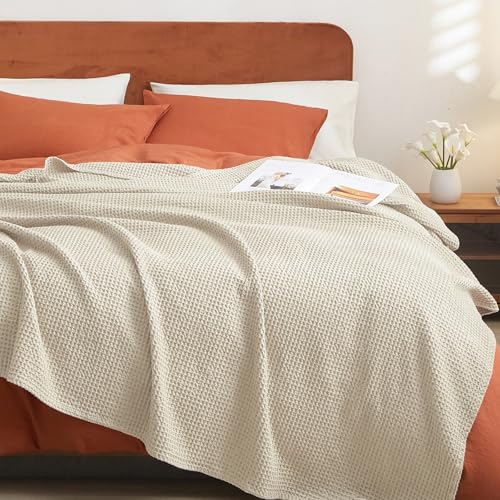
Waffle weave in a warm neutral — light enough for summer, and it stops a plain sofa looking quite so plain. Drape it over one arm and leave it slightly undone.
Layer texture, not just things
Here’s the secret that separates collected from cluttered: a collected room is rich in texture, not necessarily in stuff. Designers often suggest aiming for at least five different textures in a single space — and once you start counting, it becomes a fun little game.
Reach for a mix of:
- Natural wood — and don’t be afraid to mix wood tones. (Matching every finish is officially behind us; blended tones read as collected and add depth.)
- Woven and natural fibers — baskets, jute, rattan, a braided rug.
- Soft textiles — linen, wool, a worn quilt, a velvet pillow.
- Something with shine — brass, glass, a bit of ceramic glaze.
- Stone, pottery, or clay — for weight and an earthy calm.
A homemade quilt or throw , a ceramic vase for a single stem, and a couple of brass candlesticks will layer in three textures in an afternoon — and all three read as quietly expensive.
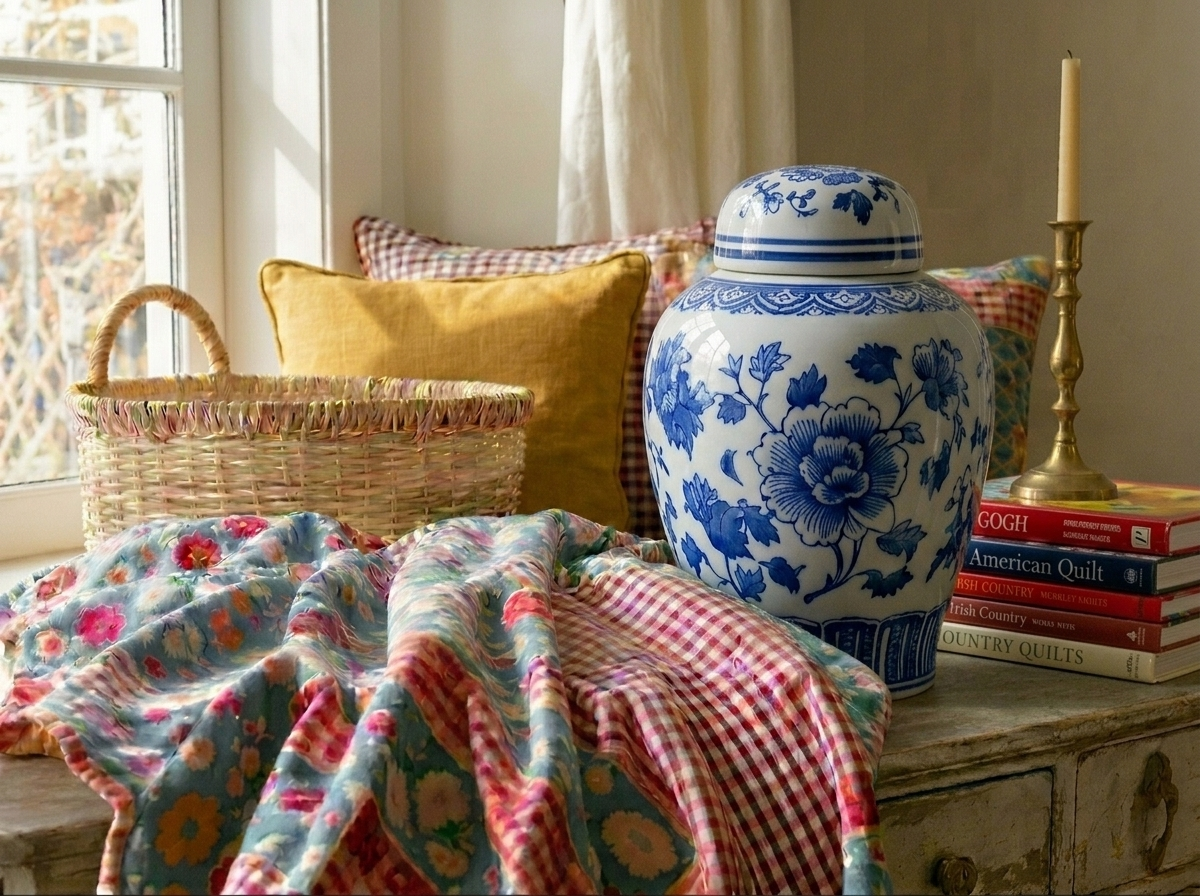
Soft cotton, a quiet block-print botanical, and a cream ground that sits happily against almost anything. Two covers, and a sofa stops looking like a sofa and starts looking like a room.

Mix old and new — that’s where the magic lives
If a room feels flat or a little “catalog,” it’s usually because everything is the same age. The fastest cure is contrast. Pair something old with something new: an antique tray on a modern console, a vintage painting over a fresh sofa, your grandmother’s books beside a contemporary lamp.
The 2026 mood in décor is leaning hard into exactly this — what designers are calling modern heritage: rooms that tell a story, where vintage pieces and new ones coexist so the home feels authentic rather than one-note. You don’t have to chase it. If you mix old and new, you’re already there. It’s the whole idea behind The Layered Home, if you’d like a book to sit with.
This is where thrifting becomes your best friend. Estate sales, antique malls, and even the dustier corners of a thrift store are full of the brass, books, frames, and pottery that give a room its patina — usually for a few dollars.
Group in odd numbers and let the room breathe
When you style a surface — a coffee table, a mantel, a shelf — group objects in odd numbers, usually threes or fives. Odd groupings feel more natural and relaxed to the eye than perfectly even, symmetrical ones. Vary the height: something tall (a candlestick, a stem of greenery), something medium (a small stack of books), something low and grounding (a bowl or box).
And then — this is the hard part for most of us — stop. Leave some space empty. In a collected home, negative space isn’t a gap you failed to fill; it’s the margin that lets every beautiful thing be seen. A clear stretch of table or a bit of bare wall gives the eye a place to rest, and it makes the pieces you did choose feel deliberate.
Negative space isn’t a gap you failed to fill; it’s the margin that lets every beautiful thing be seen.
-FINDING THE GOOD LIFE
Light it warmly
Nothing undoes a collected home faster than cold, bright overhead light. Soft, low, layered lighting is what makes a space feel gathered at the end of the day. Add a lamp or two at eye level, choose warm-white (2700K) light bulbs, and if you can, put a lamp on a simple smart plug or timer so the room glows the moment the afternoon turns a little blue.
A single table lamp with a warm linen or ceramic base in a dim corner can change the entire feeling of a room — and it’s one of my favorite small, high-impact upgrades.
If you have one of those flat builder-grade ceiling lights glaring down at you, this is the swap. Warm milk glass, a brass fitting, and a fraction of what a true antique would cost.

Add the one thing that makes it yours
A truly collected home always has a little of the person who lives there. A framed bit of your own needlework (Oh yes!). A stack of the books you actually read. A bowl of clippings from the garden. The question one should ask: “Does this feel like me?” If it does, you’ve done it right — no matter what it cost or anyone else thinks.
If a framed piece of your own has been on your list for a while, here are the cross stitch supplies I actually reach for — a gentle place to begin.
Rows of tiny x-stitches, cream on cream, quiet enough to live with. If you have not finished a piece of your own yet, this gives you that heirloom-in-the-making feeling now.

save this
The short version
To make any room feel collected and intentional on a budget:
- Shop your house first — rearrange and edit before you buy.
- Start with a calm, neutral base so layers feel intentional, not busy.
- Layer texture — aim for five: wood, woven, soft, shine, stone.
- Mix old and new for depth and story.
- Group in odd numbers and leave breathing room (margin).
- Light it warmly and low.
- Add one personal thing that makes it unmistakably yours.
A collected home isn’t bought in a weekend. It’s gathered, gently, over a life — and that’s exactly what makes it beautiful.
Frequently Asked Questions
What is a collected home decor style?
A collected style is a layered, lived-in look that appears to have come together gradually, mixing pieces of different ages, textures, and stories. It prioritizes warmth and personality over matching sets, and clarity over quantity, so the room feels calm even when it’s full.
How do I make a home look collected without it looking cluttered?
Start with a neutral base, layer in a variety of textures rather than lots of objects, group items in odd numbers with varied heights, and intentionally leave some negative space so the eye can rest. Clutter comes from too many competing things; a collected look comes from a few intentional ones.
How can I decorate on a budget and still look intentional?
Rearrange and “shop” what you already own first, then fill gaps slowly with affordable, characterful pieces — thrifted brass, books, frames, baskets, and pottery. Add warmth with a colorful throw and warm lighting. Buy slowly and only what you love, so the room builds with intention instead of impulse.
How many textures should a room have?
A helpful rule of thumb is at least five — for example, wood, a woven natural fiber, a soft textile, something with a little shine like brass or glass, and stone or pottery. Mixing textures adds richness and depth without relying on bold color or pattern.
What’s the difference between a decorated room and a collected room?
A decorated room can look like it was pulled together in a single shopping trip — coordinated but a little impersonal. A collected room looks gathered over time, full of contrast and small stories, and feels like the person who lives there.